


Welcome to Al A. Fallah, San Diego Holistic Dentist
Our practice is equipped with innovative technologies and a highly skilled staff. What stands out, however, is the humble and personable manner with which we greet and treat our patients.
In our San Diego holistic dental practice, you and your smile are our priorities. You are given our full attention as you discuss your concerns and you will be provided with necessary information that will allow you to make educated and confident decisions about your dental care. We believe in treating you as an individual; understanding that your needs will differ from anyone else.
We offer expertise, caring, technology, and comfort. Without any one of these, it is an incomplete circle of care. We provide this and more for every patient.
Dr. Fallah and his friendly team do more than diagnose and treat common dental problems with the mainstream standard of care. In our years of practice, we have seen one example after another of the impact oral health can have on the patient's general health and wellness.

-
Dental treatments and other important safety protocols during the Covid-19 pandemic
-
![Photo 1 of 2 of Dental Treatments During Covid-19]()
-
![Photo 2 of 2 of Dental Treatments During Covid-19]()
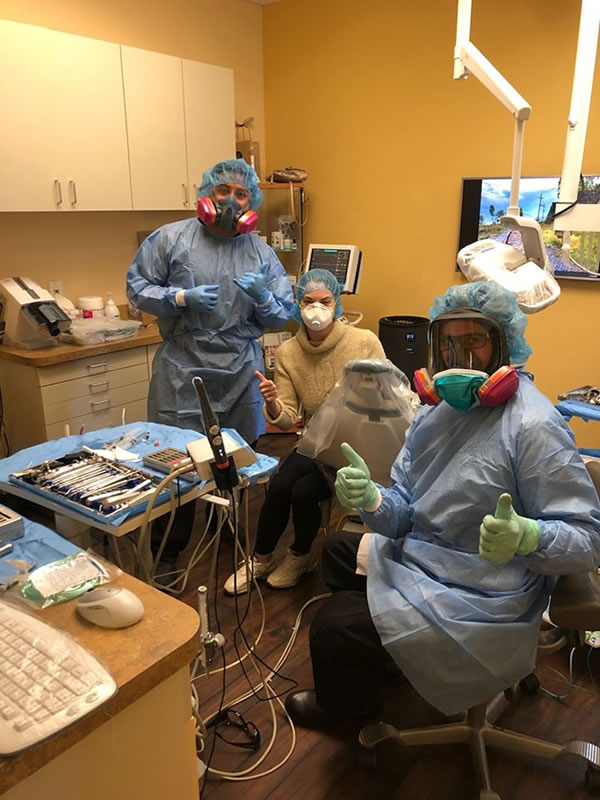
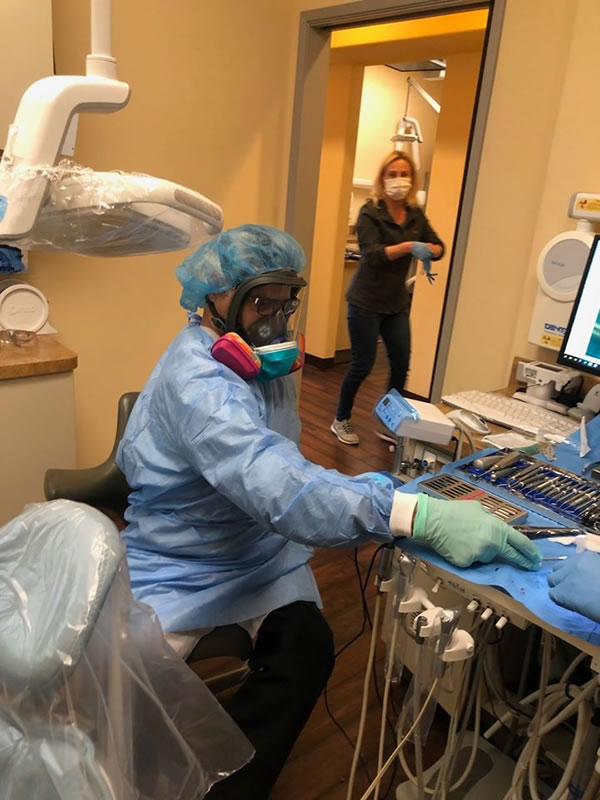
TECHNOLOGIES USED IN OUR OFFICE:
- PLANMECA CT Scan
- T-Scan
- Myotronics K-7
- HRV – Heart Rate Variability
- Alpha-Stim
- WaterLase
- Biolase
- Longevity Ozone Machine
- PRF Machine
- Surgical Piezon
- The Wand Dental Injection
- DentalVibe
- Bio-modulator
PROTOCOLS FOR ORAL AND SYSTEMIC HEALTH
We are proud to say that we treat patients from the San Diego area as well as from across the United States. Our impeccable reputation for excellence has also earned us the honor of providing care to patients from across the globe. Dr. Fallah is a sought-after dental practitioner due to his extensive training and background in safe treatment protocols along with his personable manner that makes dental visits a pleasant and informative experience.Just as important as dental treatment is the consideration of how dental disease and the restoration of the smile will affect the body. For instance, research continues to demonstrate the detrimental impact of mercury exposure. In addition to avoiding amalgam fillings, which contain mercury, Dr. Fallah employs a specific removal technique through which exposure to this substance is significantly decreased.
Dental materials may affect one person differently from another. To make the best decisions in restorative care, we perform Clifford testing or Biocomp testing. Each test is designed to identify the most suitable materials for the individual patient.
As a dedicated holistic dentist serving all areas of San Diego, Dr. Fallah utilizes various protocols from the Huggins philosophy of dentistry as well as many other holistic modalities. We also use oxygen ozone to eliminate harmful pathogens quickly in the oral environment. We also work very hard to make sure our patients are comfortable throughout their visits with us, offering noise-cancelling headphones, injection wands and techniques and more. Dr. Fallah is also one of the 3% of dentists in the United States who is trained and licensed in IV Conscious Sedation.
We are happy to schedule a convenient time for you to consult with Dr. Fallah about your dental concerns and goals. Contact our office today.
Health Talk
Featured Article
Professional Affiliations and Recognitions


Enjoy A Comfortable Atmosphere
Sunny and cheerful, the office entry welcomes you with its earth tones, bright windows, rich wooden floors and unique glass wall design. You will enjoy comfort and privacy in the inviting consultation area as well as our treatment rooms that feature ceiling and wall-mounted TVs, bright and sunny windows, and state-of-the-art equipment for your dental care that’s delivered with excellence and integrity. We want your feedback! Connect with us and leave a review!


Dentistry for San Diego, 1293 Carlsbad Village Drive, Carlsbad, CA 92008 | Call Us: (760) 730-1600
© Copyright 2024 Dentistry for San Diego. All rights reserved. Powered by www.ekwa.com
Any and all statements within the DentistryforSanDiego.com website have not been evaluated by the Food and Drug Administration.
Information and Products described or displayed on this site are not intended to cure, treat, diagnose or prevent any disease.
Information and Products described or displayed on this site are not intended to cure, treat, diagnose or prevent any disease.